Community representatives from across the Vatu-i-Ra Seascape have strengthened their commitment to climate adaptation and conservation following a three-day peer learning and knowledge exchange workshop convened by WCS-Fiji.
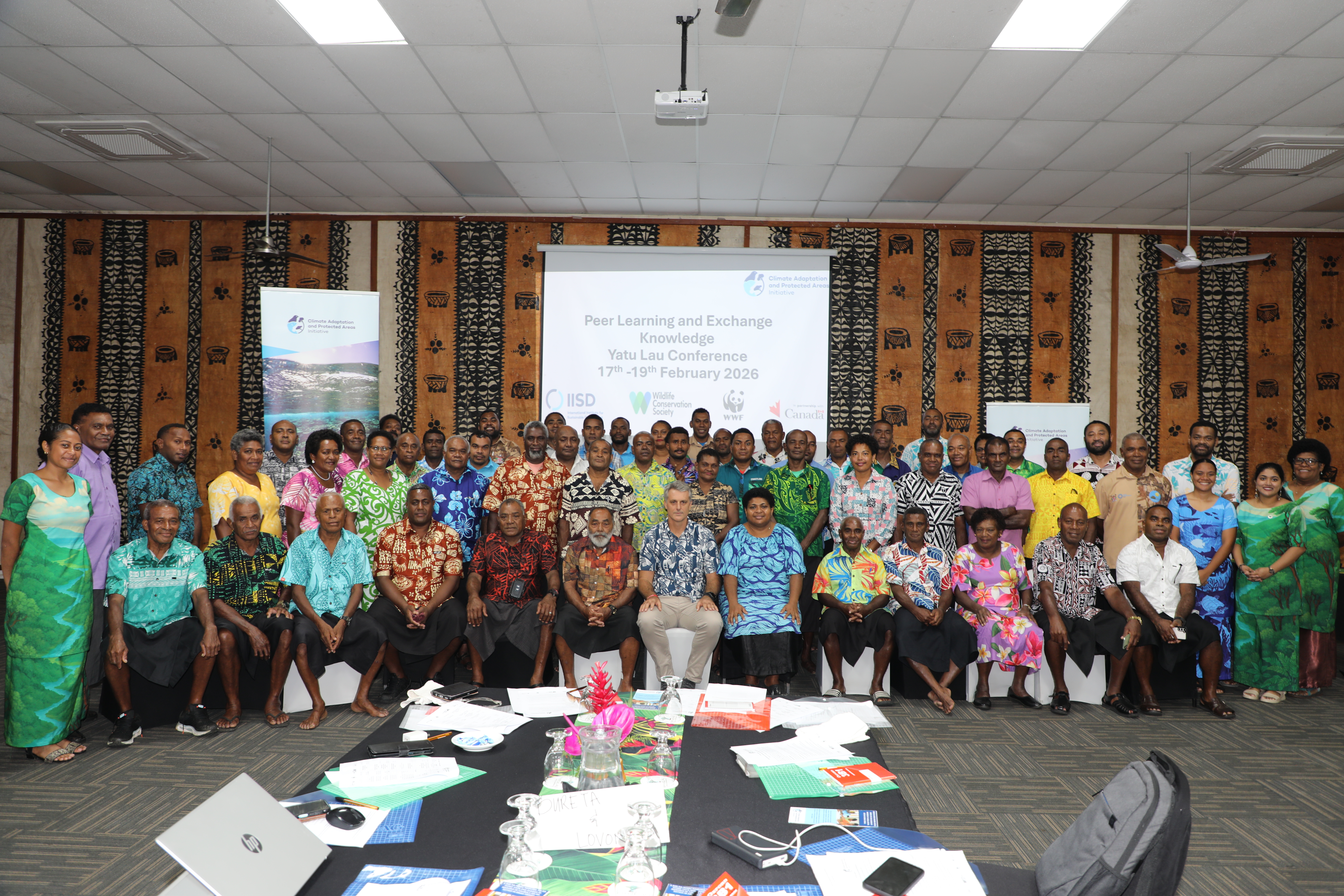
Vatu-i-Ra Seascape community reps with WCS Staff and Stakeholders during the Peer Learning Event at Studio 6.
More than 50 participants representing Nakorotubu, Dawasamu, Namalata, Dama, Kubulau, Bua, Bureta and Lovoni districts gathered alongside officials from the Ministry of Forestry and Fisheries, Ministry of Agriculture, and the iTaukei Affairs Board. The workshop aimed to deepen understanding of nature-based solutions, strengthen inclusive climate action, and chart practical pathways for community-led environmental stewardship.
The event provided a platform for communities to reflect on progress, share lessons learned, and identify areas for improvement in ongoing conservation and adaptation efforts.
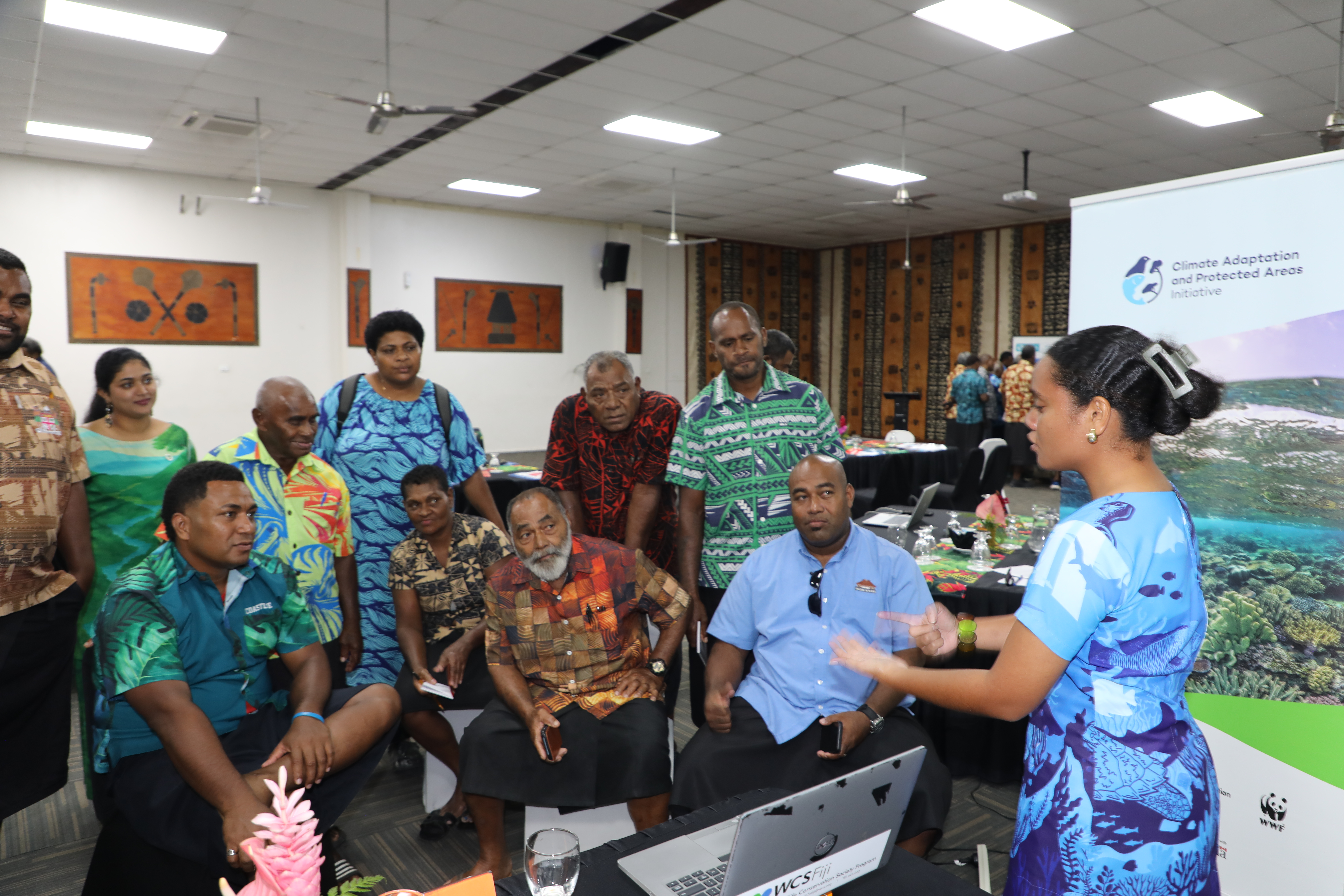
Project Assistant, Fuka discussing implemented project work on the ground with the Bureta District Reps.
Building knowledge and inclusive climate leadership
Through interactive discussions and hands-on activities, participants explored how Gender Equality, Disability and Social Inclusion (GEDSI) principles can be applied in local decision-making. Sessions focused on strengthening inclusive approaches to climate adaptation, integrating Traditional Ecological Knowledge with science-based planning, and enhancing cross-community learning.
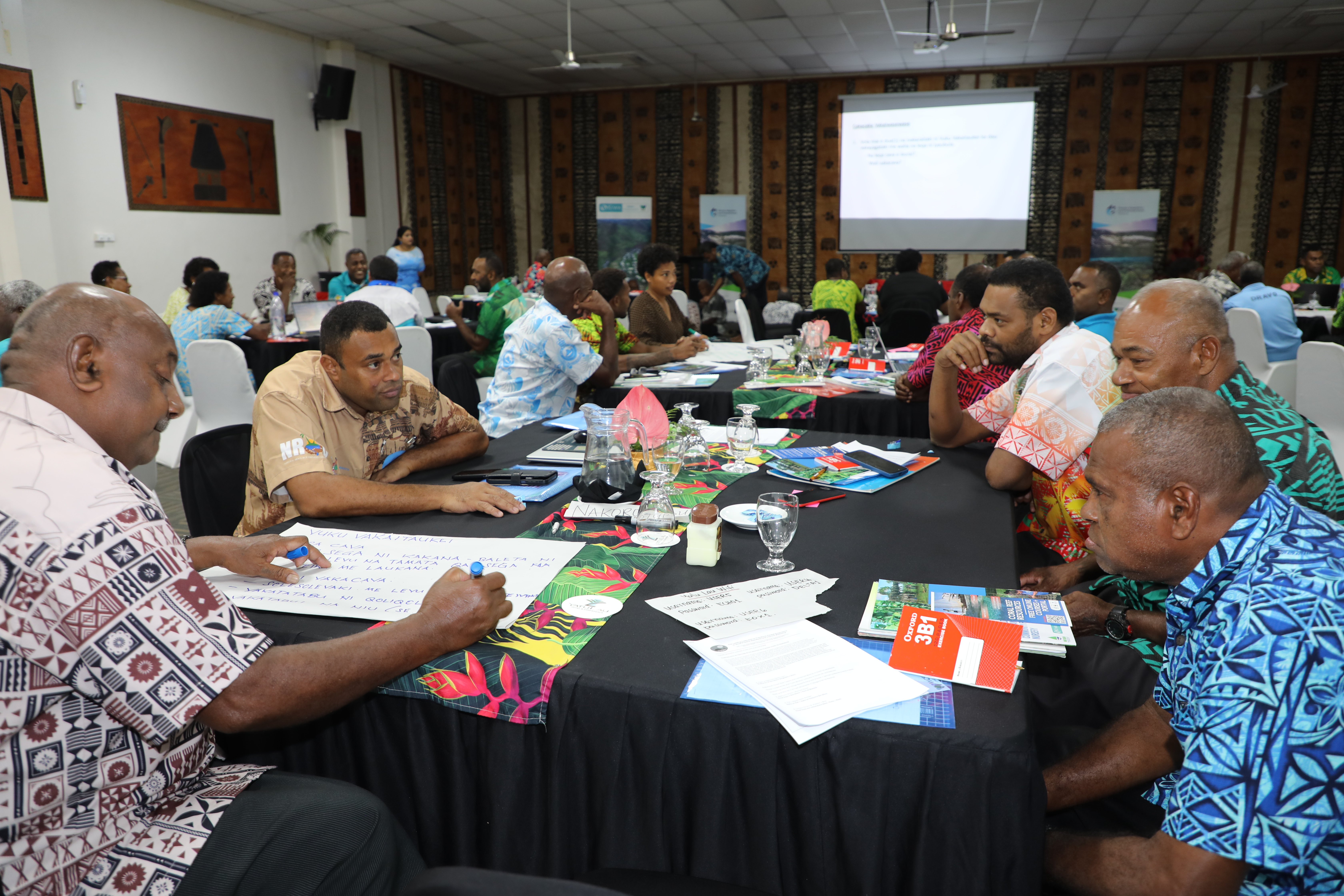
Group Discussions amongst members of the Ra community reps during group work.
The peer exchange was designed not only to review project implementation under CAPA and Kiwa WISH+, but also to build leadership capacity at the district level and deepen partnerships for long-term ecosystem-based management.
Day two placed special emphasis on communication, visibility and storytelling. Participants examined how sharing community experiences can build broader support for nature-based solutions. A highlight was a district group proposal-writing exercise, where representatives developed practical project concepts and presented them to their peers for feedback, equipping communities with skills to mobilise support and resources from the ground up.

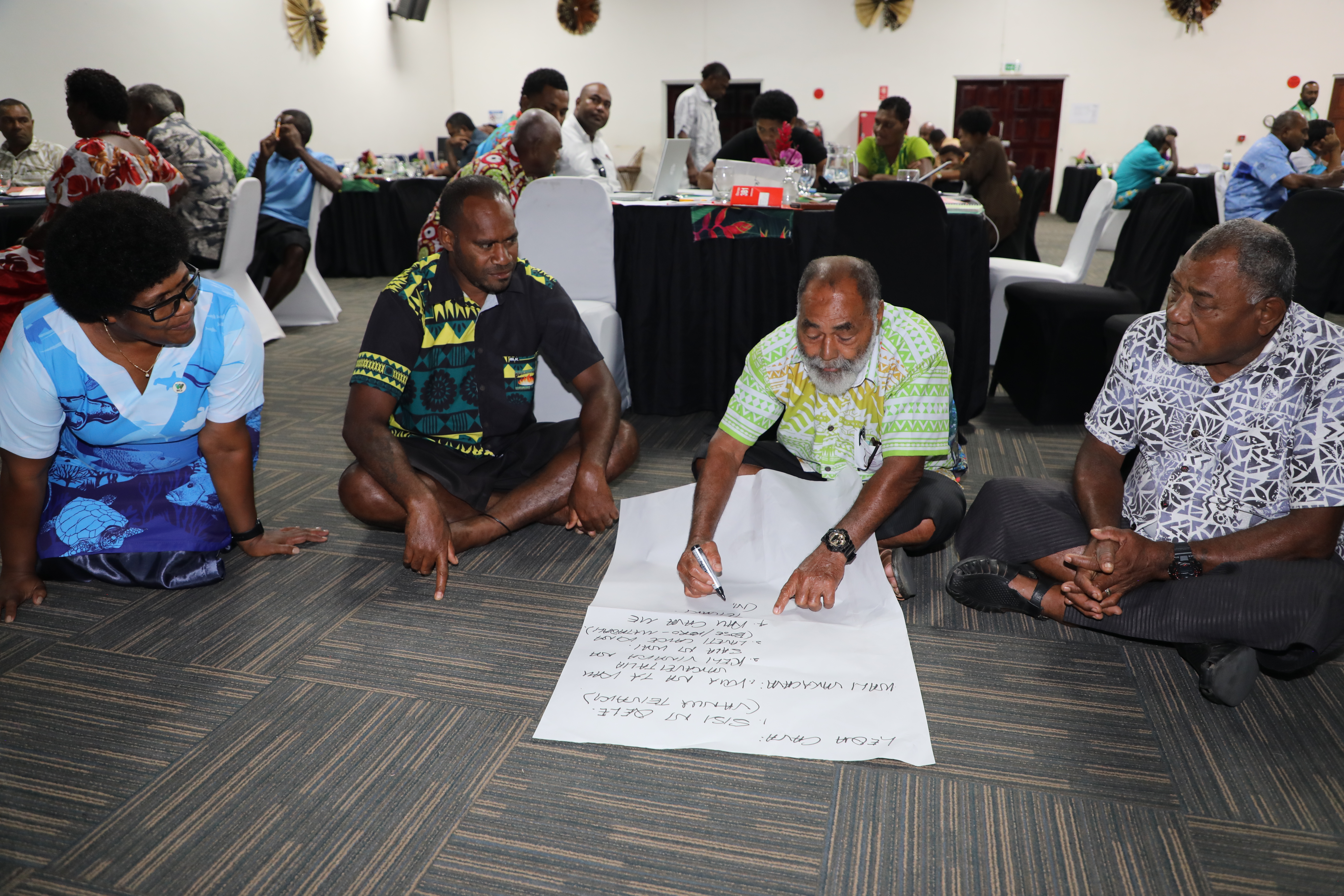
Ra Community Rep skimming through nursery manual (left). Lovoni District Reps group discussions. (right).
Learning from the field
The final day featured field visits showcasing successful local models of conservation and sustainable land use.
At the Kalokolevu Biodiversity Forest, participants observed a thriving example of community-led forest stewardship. Managed by residents, the forest demonstrates how collective care for biodiversity protects native species, restores ecological balance, and provides long-term benefits for surrounding communities. The visit reinforced the importance of local ownership in conservation and inspired district representatives to replicate similar initiatives in their own villages.
The group also visited the Navuso Agricultural Technical Institute, a centre for agricultural education and innovation. There, participants were exposed to both traditional and modern farming systems, including poultry, piggery and dairy production, crop rotation, greenhouse farming and fruit tree cultivation. The institute’s programmes highlight how sustainable agriculture can enhance livelihoods, strengthen food security, and build resilience to climate change.
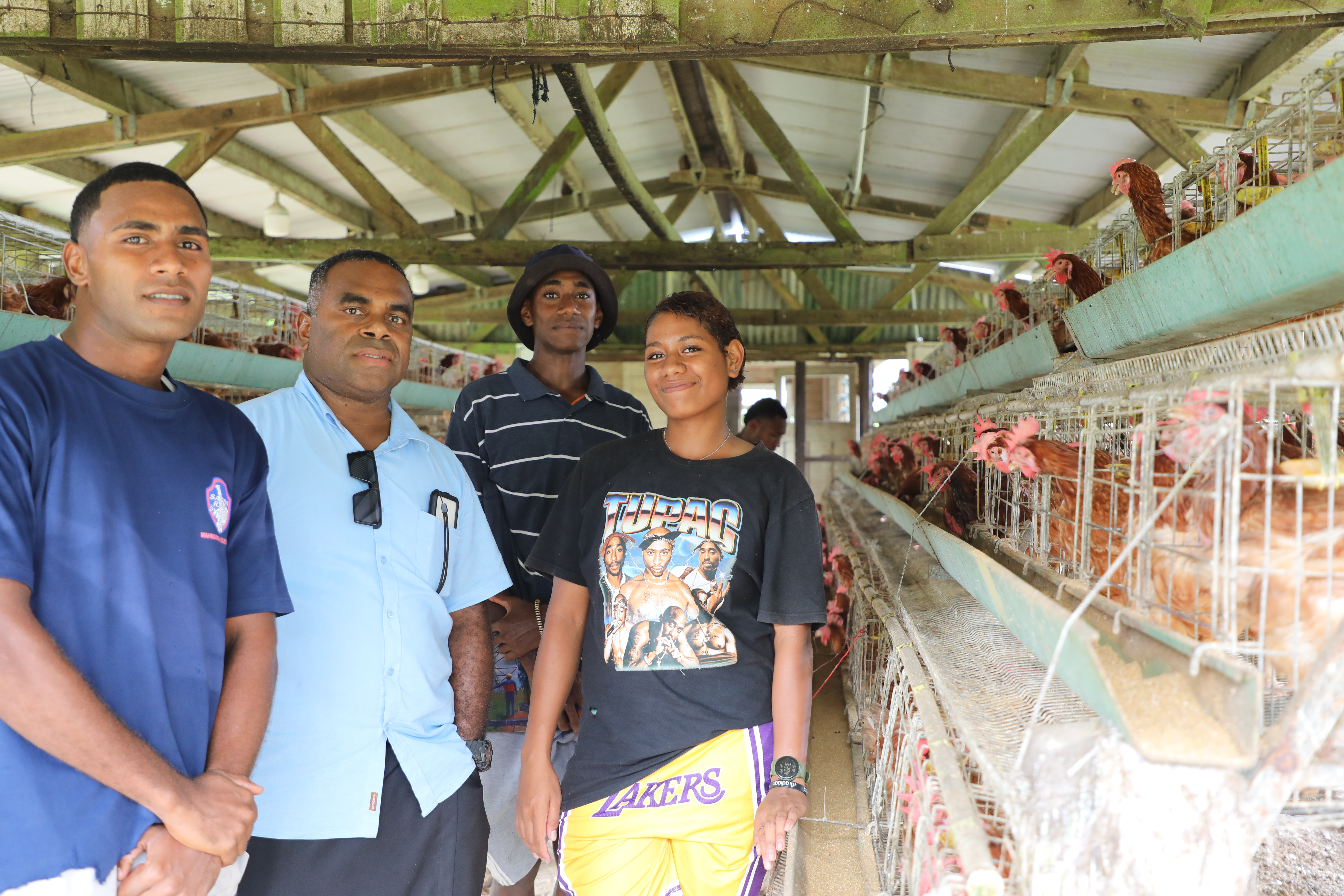
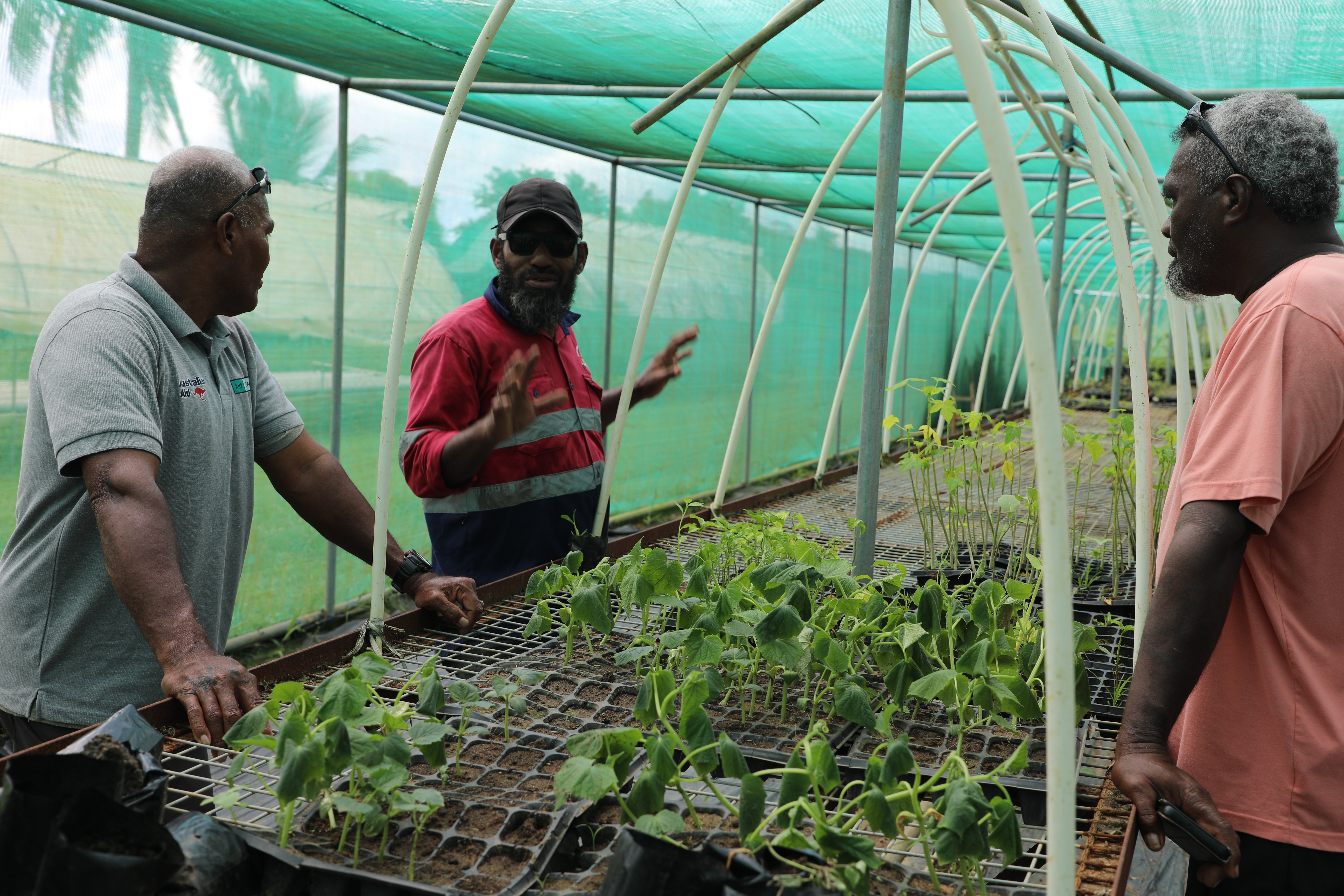
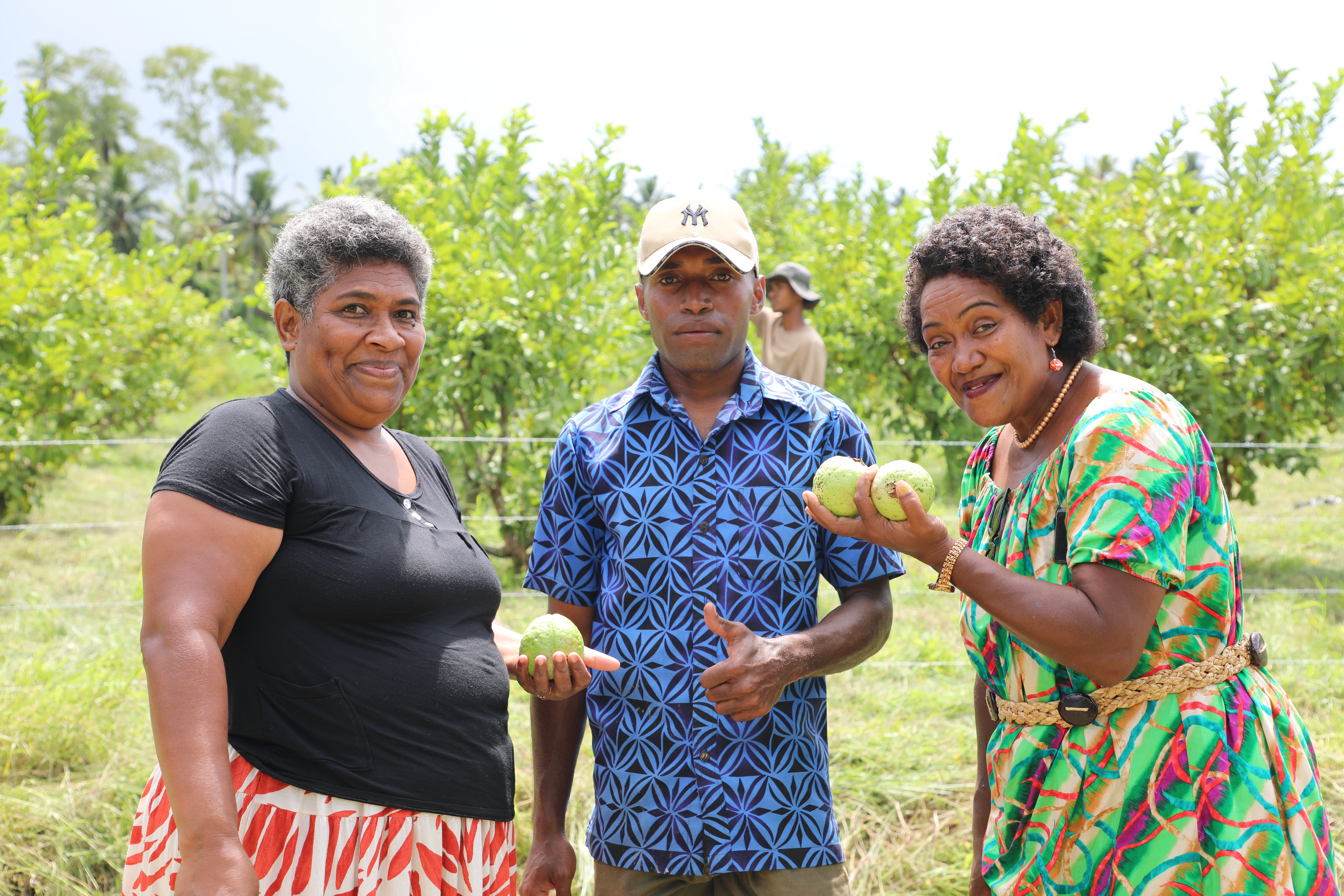
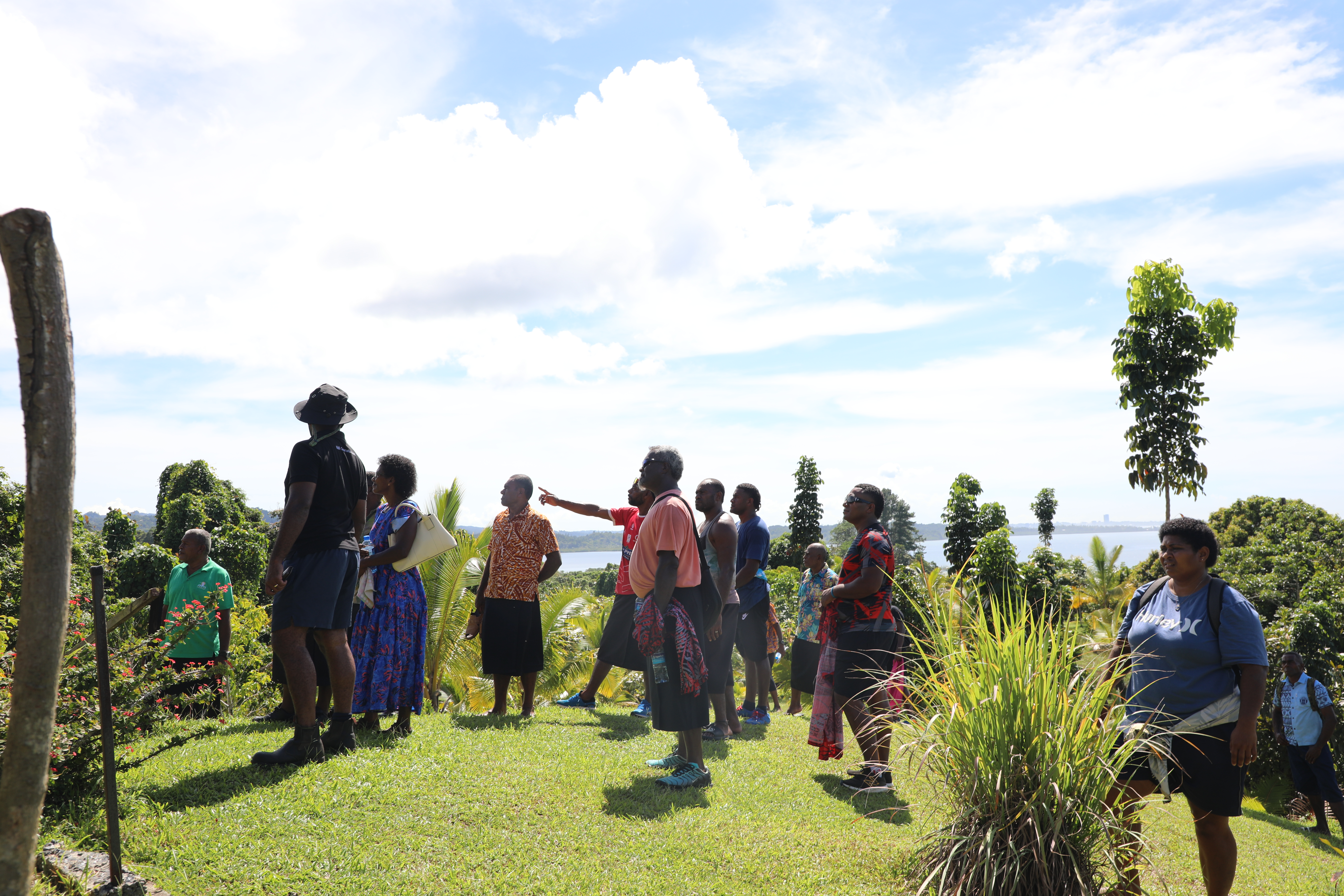
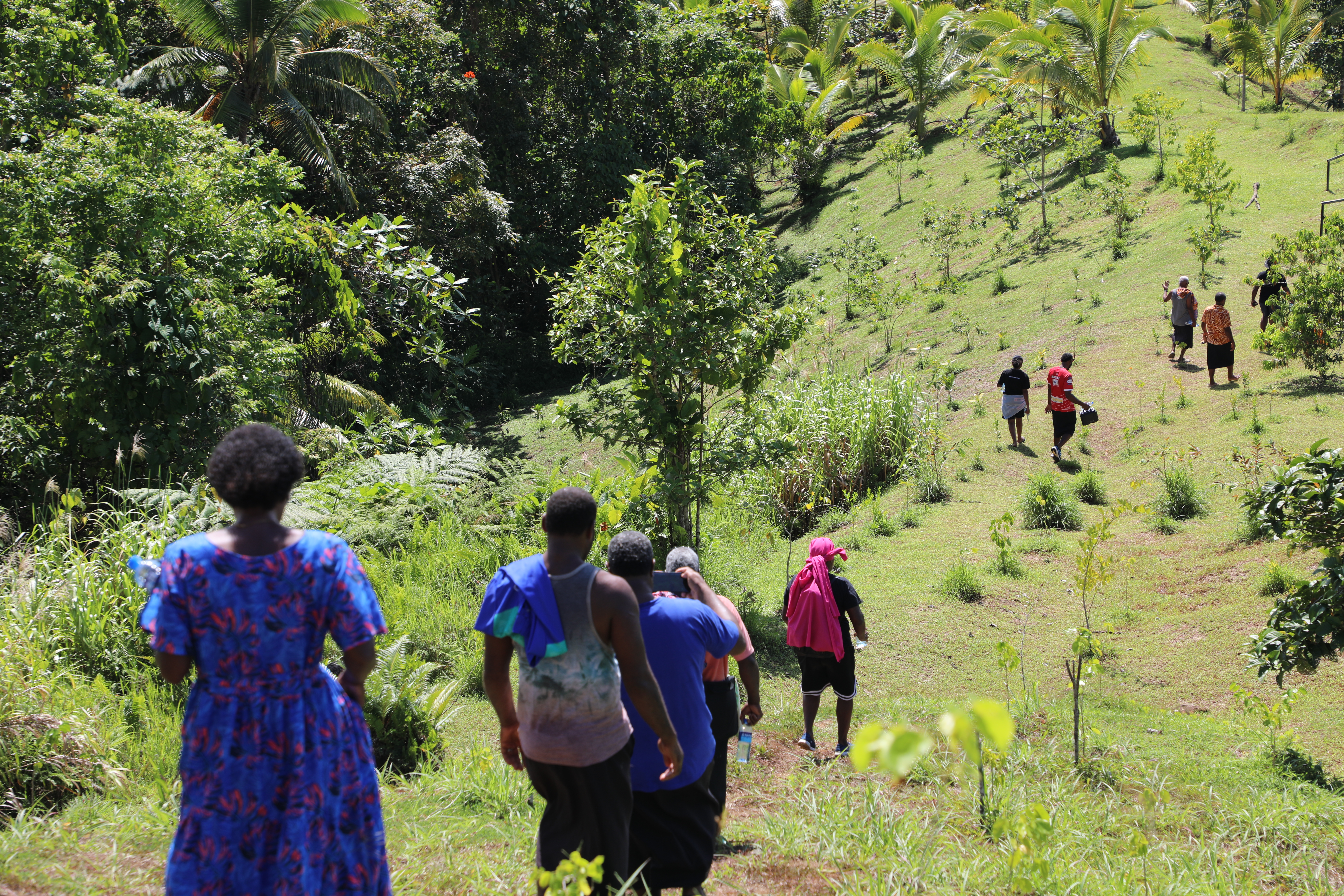
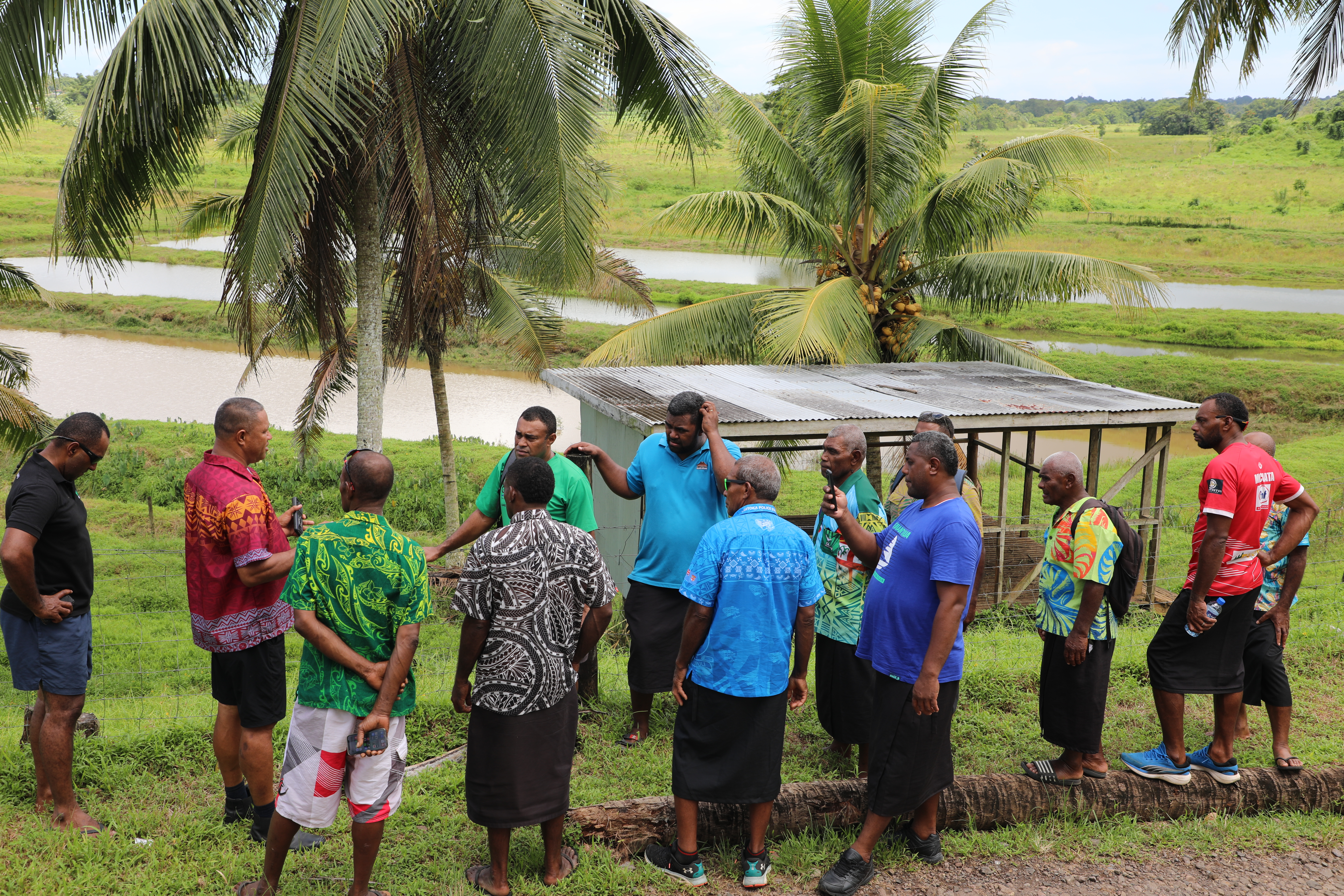
Day 3 Field Visit to Kalokolevu Biodiversity Forest and to Navuso Agricultural Technical Institute.
Empowering communities to lead
Concluding the three-day workshop, participants had consolidated key lessons on community-led conservation, sustainable land management, and the care of reforested and protected areas.
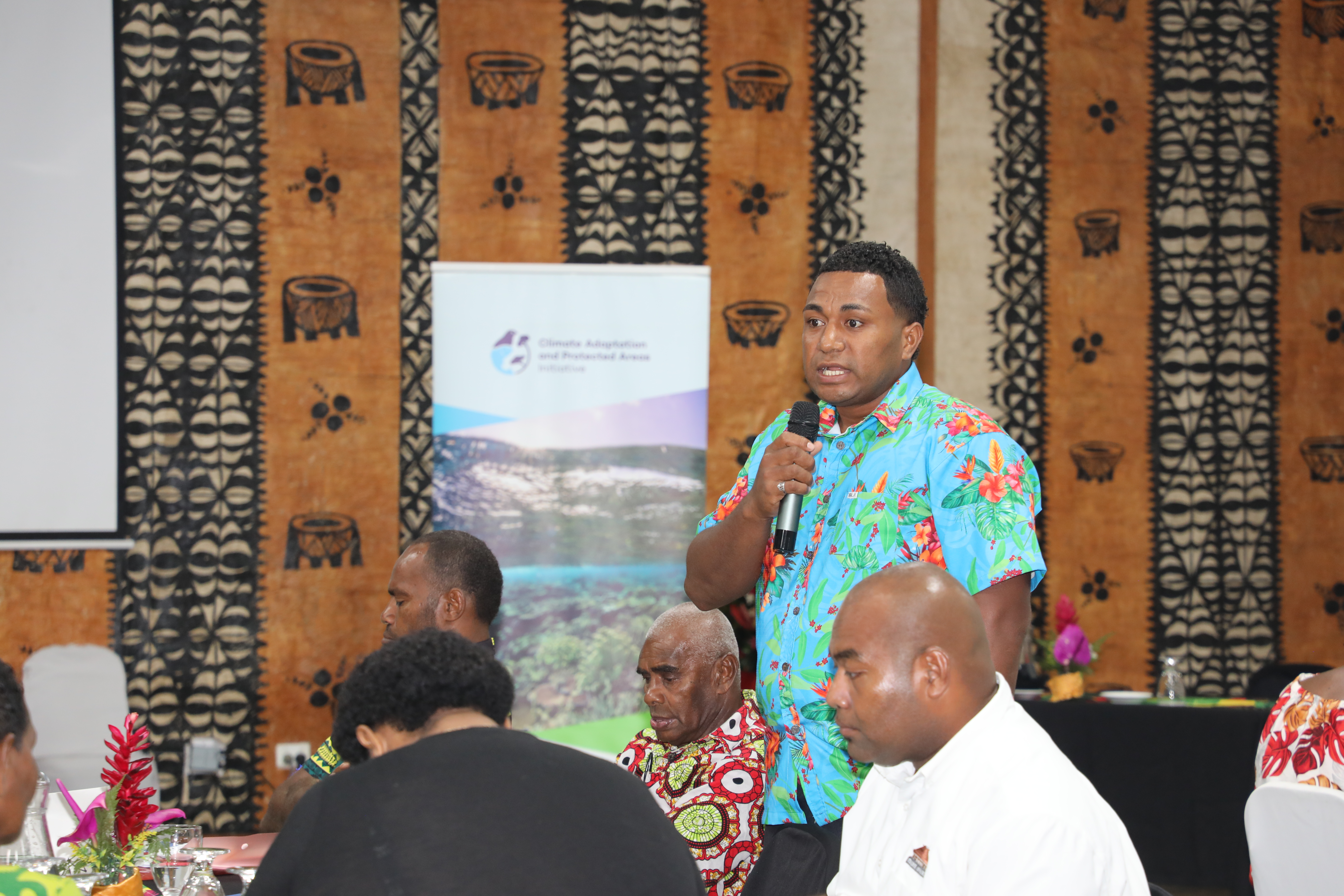
Nasaga Village Headman, Noa Bole sharing his views regarding the project implementation that has been done on Bureat District during the Peer Learning Event at Studio 6.
Nasaga Village headman Noa Bole of Bureta District described the event as “eye-opening,” saying it broadened his understanding of local nature-based solutions and strengthened his ability to support proposal development at the community level. As a young leader, he said he valued the opportunity to learn from other districts, particularly on the importance of embedding traditional knowledge within conservation efforts.
Combining peer exchange, field experience and practical skills development was intended to empower attendees to return home as advocates for sustainable development. Strengthened stewardship at the district level, they said, will contribute not only to healthier forests and farms, but also to improved livelihoods, food security and long-term environmental resilience.
The workshop is part of the Climate Adaptation and Protected Areas Initiative, implemented in partnership with the International Institute of Sustainable Development and funded by Canada's International Development through Global Affairs Canada.
The workshop was also a part of the Kiwa WISH+ Project under the Kiwa Initiative which is funded by the European Union in the Pacific La politique étrangère du Canada – Affaires mondiales Canada AFD - Agence Française de Développement Australian Government Department of Foreign Affairs and Trade and New Zealand Ministry of Foreign Affairs and Trade.